Importance of Cash Flow for Businesses Managing Financial Stability

Cash flow capital working financial manage important profit most vs kpis operating business between difference small change profits illustration adjustments

Exploring the vital role of cash flow in business operations, this article delves into how effective management can ensure long-term sustainability and success.

Understanding the impact of cash flow on day-to-day activities and overall financial health is crucial for any business striving to thrive in a competitive market.

Importance of Cash Flow for Businesses

Cash infographic recruiting prism atulhost

Cash flow is the movement of money in and out of a business, including both income and expenses. It is crucial for the financial health of a company as it determines the availability of funds to meet obligations, invest in growth, and cover day-to-day expenses.

Impact of Cash Flow on Company Operations

Effective cash flow management directly impacts a company’s ability to pay suppliers, employees, and creditors on time. For example, a business with poor cash flow may struggle to purchase inventory, leading to stock shortages and lost sales opportunities. Additionally, inadequate cash flow can hinder a company’s ability to invest in new equipment or technology, hampering growth and competitiveness.

Significance of Managing Cash Flow Effectively

Proper cash flow management is essential for business sustainability. By ensuring a steady inflow of cash to cover expenses and liabilities, companies can avoid financial crises and maintain operations smoothly. Effective cash flow management also allows businesses to plan for the future, seize growth opportunities, and weather economic downturns more effectively.

Cash Flow

Cash flow capital working financial manage important profit most vs kpis operating business between difference small change profits illustration adjustments

Cash flow refers to the movement of money in and out of a business. It is crucial for the financial health of a company as it helps determine how much money is available to meet expenses, pay debts, and invest in growth opportunities.

Components of Cash Flow

Cash flow is typically categorized into three main components:

  • Operating Cash Flow: This represents the cash generated or used in the core operations of the business. It includes income from sales and expenses such as salaries, rent, and utilities.
  • Investing Cash Flow: This refers to the cash flow related to investments in assets such as equipment, property, or securities. It shows how much money is being spent on acquiring or selling long-term assets.
  • Financing Cash Flow: This component reflects the cash flow from financing activities such as issuing stock, repurchasing shares, or taking out loans. It indicates how the company is raising capital or repaying debts.

Difference between Cash Flow and Profit

While profit is the difference between revenue and expenses, cash flow focuses on the actual cash that flows in and out of the business. Profit can be manipulated by accounting practices, but cash flow provides a more accurate picture of a company’s financial position.

Importance of Cash Flow Analysis

Analyzing cash flow is essential for decision-making in businesses because:

  • It helps in managing day-to-day operations by ensuring there is enough cash to cover expenses.
  • It enables businesses to plan for short-term and long-term financial needs, such as investments or expansions.
  • It provides insights into the liquidity and solvency of the company, indicating its ability to meet financial obligations.
  • It assists in identifying potential cash shortages or surpluses, allowing for proactive measures to be taken.

In conclusion, the proper handling of cash flow remains a cornerstone for businesses looking to navigate challenges and achieve lasting prosperity. By prioritizing effective management strategies, companies can secure a solid financial foundation for future growth and development.

FAQ Compilation

What is cash flow analysis?

Cash flow analysis involves examining the inflow and outflow of cash within a business to assess its financial health and make informed decisions.

How does cash flow differ from profit?

While profit represents total revenue minus expenses over a specific period, cash flow focuses on the actual movement of cash in and out of a business, providing a more immediate view of liquidity.

Why is effective cash flow management important?

Efficient cash flow management ensures that a business can meet its financial obligations, invest in growth opportunities, and weather unexpected financial challenges.

What is Cash Flow? Understanding the Basics and Importance

Cash understanding investopedia investing samples jiang sabrina

Delve into the realm of cash flow with a clear focus on its definition, significance, and real-life implications for businesses. Let’s uncover the essence of managing cash flow effectively.

Explore the different types of cash flow, dissect the components of a cash flow statement, and discover essential strategies for optimizing cash flow management.

What is Cash Flow?

Cash flow in the context of business finance refers to the movement of money in and out of a business. It includes all the money coming into the business from various sources (such as sales revenue, investments, and loans) and all the money going out of the business to cover expenses (like rent, salaries, and supplies).Understanding cash flow is crucial for businesses because it helps in assessing the liquidity and financial health of the company.

Positive cash flow indicates that a business is generating more money than it’s spending, which is essential for covering operational costs, investing in growth opportunities, and fulfilling financial obligations. On the other hand, negative cash flow means that a business is spending more money than it’s earning, which can lead to financial difficulties, debt accumulation, and potential bankruptcy.Examples of positive cash flow scenarios include consistent sales revenue exceeding expenses, efficient management of accounts receivable and payable, and successful investment returns.

Conversely, negative cash flow scenarios can arise from high overhead costs, slow-paying customers, unexpected expenses, or declining sales.It’s important to note that cash flow differs from profit. While profit represents the difference between revenue and expenses over a specific period, cash flow focuses on the actual movement of cash in and out of the business regardless of when it’s earned or spent.

A business can be profitable but still face cash flow challenges if there’s a delay in receiving payments or managing cash effectively.

Cash Flow Management

Effective cash flow management is essential for businesses to maintain financial stability and support growth. It involves monitoring cash flow projections, optimizing cash inflows and outflows, managing working capital efficiently, and preparing for potential cash flow disruptions. By implementing sound cash flow management practices, businesses can enhance their financial resilience and seize opportunities for expansion and innovation.

Types of Cash Flow

Flow drivers

Understanding the different types of cash flow is essential for managing the financial health of a business.

Operating Cash Flow

Operating cash flow refers to the cash generated from a company’s core business activities. It includes revenue from sales of goods or services and expenses related to those activities.

  • Example: A retail store receives cash from customers purchasing products and pays cash for inventory and employee salaries.
  • Contribution to overall cash flow: Positive operating cash flow indicates that a company is able to sustain its operations and cover day-to-day expenses.

Investing Cash Flow

Investing cash flow involves cash transactions related to the purchase or sale of long-term assets or investments.

  • Example: A company buys new equipment for production or sells an investment in another business.
  • Contribution to overall cash flow: Investing cash flow reflects the company’s growth and expansion strategies, as well as its ability to invest in future opportunities.

Financing Cash Flow

Financing cash flow represents cash transactions related to the company’s capital structure, such as equity or debt financing.

  • Example: Issuing new shares of stock to raise capital or repaying a bank loan.
  • Contribution to overall cash flow: Financing cash flow shows how a company funds its operations and investments, as well as its ability to manage debt and equity effectively.

Cash Flow Statement

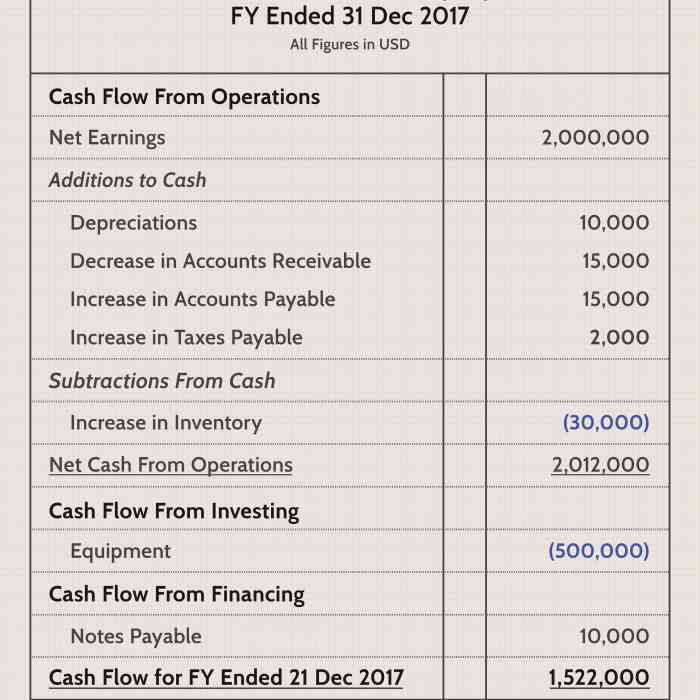
The cash flow statement is a financial statement that provides information about the cash inflows and outflows of a company during a specific period. It helps in analyzing how well a company manages its cash position, liquidity, and overall financial health.

Purpose and Components of a Cash Flow Statement

A cash flow statement consists of three main components: operating activities, investing activities, and financing activities. These sections help to categorize the cash flows and show where the money is coming from and where it is going.

  • Operating Activities: This section includes cash flows from the primary business operations of the company, such as revenue and expenses.
  • Investing Activities: This section includes cash flows from the purchase and sale of long-term assets, such as property, plant, and equipment.
  • Financing Activities: This section includes cash flows from activities related to the company’s capital structure, such as issuing or repurchasing shares, and borrowing or repaying debt.

How a Cash Flow Statement Helps in Analyzing a Company’s Financial Health

By examining a company’s cash flow statement, investors and analysts can evaluate the company’s ability to generate cash, its liquidity position, and its overall financial stability. A positive cash flow from operating activities is generally seen as a good sign, as it indicates that the company is generating enough cash to support its operations.

Step-by-Step Guide on How to Create a Cash Flow Statement

Creating a cash flow statement involves analyzing the cash inflows and outflows from various activities of the company during a specific period. Here is a basic step-by-step guide to create a cash flow statement:

  1. Start with the opening balance of cash at the beginning of the period.
  2. Calculate the cash inflows and outflows from operating activities, investing activities, and financing activities.
  3. Summarize the total cash inflows and outflows for each activity.
  4. Calculate the net cash flow by subtracting the total cash outflows from the total cash inflows.
  5. End with the closing balance of cash at the end of the period.

Significance of Cash Flow Statement Analysis for Investors

Analyzing a company’s cash flow statement is crucial for investors as it provides insights into the company’s financial health and its ability to generate cash. Investors can use the information from the cash flow statement to assess the company’s liquidity, solvency, and overall financial performance. By understanding the cash flow dynamics of a company, investors can make informed decisions about investing in or divesting from the company’s stock.

Managing Cash Flow
Cash understanding investopedia investing samples jiang sabrina

Effective cash flow management is crucial for the financial health and sustainability of a business. By implementing strategies to improve cash flow, forecasting future cash flows, and utilizing tools to monitor and control cash flow effectively, businesses can ensure they have enough liquidity to cover expenses and invest in growth.

Strategies for Improving Cash Flow

  • Offering discounts for early payments to incentivize customers to pay sooner.
  • Negotiating better payment terms with suppliers to extend payment deadlines.
  • Reducing unnecessary expenses to free up cash for essential operations.
  • Regularly reviewing and optimizing pricing strategies to maximize revenue.

Importance of Forecasting Cash Flow

Forecasting cash flow is essential for business planning as it helps in anticipating cash shortages or surpluses. By forecasting cash flow, businesses can make informed decisions on investments, expansion, and managing working capital to ensure financial stability.

Tools and Techniques for Monitoring and Controlling Cash Flow

  • Using accounting software to track income and expenses in real-time.
  • Creating cash flow statements regularly to analyze cash movements.
  • Implementing cash flow budgets to plan and manage cash inflows and outflows.
  • Utilizing cash flow ratios to assess liquidity and financial health.

Successful Cash Flow Management Practices

One real-life example of successful cash flow management is Apple Inc., which strategically manages its cash reserves to fund research and development, acquisitions, and dividends. By maintaining a strong cash position, Apple can navigate economic uncertainties and invest in innovation while ensuring financial stability.

In conclusion, grasping the concept of cash flow is crucial for sustainable business growth. By mastering the art of cash flow management, businesses can navigate financial challenges with confidence and foresight.

Key Questions Answered

What are the key components of a cash flow statement?

The key components include operating activities, investing activities, and financing activities that showcase how cash moves in and out of a business.

How does cash flow differ from profit?

Cash flow represents the actual inflow and outflow of cash, while profit is a measure of income that includes non-cash items.

Why is forecasting cash flow important for businesses?

Forecasting cash flow helps businesses anticipate financial needs, identify potential challenges, and make informed decisions to ensure financial stability.


Positive vs Negative Cash Flow Understanding the Impact on Financial Health

Cash flow statement negative positive table bookkeeping lessons online amounts shown

As Positive vs Negative Cash Flow takes center stage, this opening passage beckons readers with casual formal language style into a world crafted with good knowledge, ensuring a reading experience that is both absorbing and distinctly original.

In the realm of business finance, the distinction between positive and negative cash flow can have profound effects on a company’s bottom line and overall stability.

Positive vs Negative Cash Flow

Cash flow positive negative presentation securities marketable ppt powerpoint

In a business context, positive cash flow refers to the situation where a company’s incoming cash exceeds its outgoing cash within a specific period. This means that the company is generating more revenue than it is spending, leading to a healthy financial position.

On the other hand, negative cash flow signifies that a company’s outgoing cash surpasses its incoming cash during a given timeframe. This indicates that the company is spending more money than it is making, which can be a cause for concern in terms of financial stability.

Implications of Positive Cash Flow

Positive cash flow allows a company to reinvest in its operations, pay off debts, expand its business, or distribute dividends to shareholders. It indicates financial stability, growth potential, and the ability to weather economic downturns.

Implications of Negative Cash Flow

Negative cash flow can lead to financial distress, inability to meet financial obligations, and potential bankruptcy if not addressed promptly. It may signal operational inefficiencies, excessive debt, or a decline in revenue, requiring strategic measures to improve the company’s financial health.

Importance of Cash Flow

Cash flow is a crucial metric for businesses as it provides insights into the financial health and stability of a company. It indicates the amount of money flowing in and out of the business, affecting its ability to pay bills, invest in growth, and meet financial obligations.Positive cash flow can benefit a company’s operations in several ways. It allows businesses to reinvest in their operations, pursue new opportunities, and weather unexpected financial challenges.

For example, a company with positive cash flow can easily fund research and development projects, expand its product line, or hire additional staff to support growth.On the other hand, negative cash flow poses significant risks to a business and can impact its sustainability. When a company consistently spends more money than it earns, it may struggle to pay suppliers, employees, or creditors on time.

This can lead to financial distress, missed opportunities for growth, and potential bankruptcy if not addressed promptly.

Risks of Negative Cash Flow

Negative cash flow can result in a company accumulating debt, reducing its ability to invest in future growth opportunities. It may also lead to a decrease in creditworthiness, making it challenging to secure financing or attract investors. Additionally, negative cash flow can strain relationships with suppliers and employees, affecting the overall operations and reputation of the business.

Factors Influencing Cash Flow

Cash flow statement negative positive table bookkeeping lessons online amounts shown

When it comes to cash flow, there are several key factors that can significantly impact the financial health of a business. Understanding these factors is crucial for maintaining a positive cash flow and avoiding potential pitfalls.

Key Factors Contributing to Positive Cash Flow

  • Efficient Accounts Receivable Management: Timely collection of payments from customers can boost cash flow.
  • Cost Control: Monitoring and reducing unnecessary expenses can help increase cash reserves.
  • Effective Inventory Management: Avoiding overstock and minimizing carrying costs can free up cash for other uses.
  • Strong Sales and Revenue Growth: Generating consistent sales and revenue can ensure a steady influx of cash.

External Influences Leading to Negative Cash Flow

  • Market Downturns: Economic factors beyond a company’s control can impact sales and revenue negatively.
  • Supplier Issues: Delays or price increases from suppliers can strain cash flow.
  • Regulatory Changes: New regulations or compliance requirements may lead to unexpected expenses.
  • Competitive Pressures: Price wars or aggressive competition can squeeze profit margins and cash flow.

Impact of Internal Decisions on Cash Flow

  • Investment Decisions: Heavy capital investments can tie up cash in the short term but lead to long-term growth.
  • Financing Choices: Opting for loans or lines of credit can provide immediate cash but increase debt obligations.
  • Expense Management: Controlling variable expenses and optimizing fixed costs can improve cash flow over time.
  • Strategic Partnerships: Collaborating with other businesses can provide access to resources without significant upfront costs.

Managing Cash Flow

Effective management of cash flow is crucial for the sustainability and growth of any business. By implementing strategies to improve cash flow management, businesses can ensure they have enough liquidity to cover expenses and seize opportunities for growth. Here, we will explore some tips on maintaining a positive cash flow during challenging times and the role of forecasting and budgeting in managing cash flow effectively.

Strategies for Improving Cash Flow Management

  • Monitor Cash Flow Regularly: Keep a close eye on cash inflows and outflows to identify any potential issues early on.
  • Minimize Expenses: Look for areas where expenses can be reduced without compromising the quality of products or services.
  • Accelerate Invoicing: Encourage prompt payment from customers by offering incentives for early payments.
  • Negotiate Better Terms: Work with suppliers to negotiate favorable payment terms to improve cash flow.
  • Diversify Revenue Streams: Explore new opportunities to generate additional income and reduce dependence on a single source of revenue.

Maintaining Positive Cash Flow During Challenging Times

  • Build Cash Reserves: Set aside a portion of profits during good times to create a financial cushion for challenging periods.
  • Implement Cost-Cutting Measures: Identify non-essential expenses that can be eliminated temporarily to preserve cash flow.
  • Focus on Cash Flow Forecasting: Use historical data and market trends to predict cash flow fluctuations and plan accordingly.
  • Stay in Communication with Stakeholders: Keep suppliers, lenders, and investors informed about any potential cash flow challenges to seek support or flexibility.

Role of Forecasting and Budgeting in Managing Cash Flow

Forecasting and budgeting play a vital role in managing cash flow effectively by providing a roadmap for financial decision-making. By forecasting future cash inflows and outflows and creating a detailed budget, businesses can anticipate cash flow gaps and take proactive measures to address them. Regularly reviewing and updating forecasts and budgets allows businesses to adapt to changing circumstances and make informed financial decisions to maintain a positive cash flow.

In conclusion, mastering the dynamics of Positive vs Negative Cash Flow is essential for businesses to thrive and navigate financial challenges effectively, ensuring sustained growth and success in the competitive market landscape.

FAQ Overview

What does positive cash flow mean in a business context?

Positive cash flow indicates that a company is receiving more cash than it is spending, leading to increased liquidity and financial stability.

How does negative cash flow impact business sustainability?

Negative cash flow can strain a company’s operations by limiting its ability to invest in growth opportunities, pay debts, or cover essential expenses, ultimately threatening its long-term viability.

What are key factors that contribute to positive cash flow?

Factors such as efficient inventory management, timely invoicing, and strong sales performance can contribute to maintaining positive cash flow for a business.

How can businesses maintain a positive cash flow during challenging times?

Businesses can maintain positive cash flow during challenging times by reducing unnecessary expenses, negotiating better payment terms with suppliers, and exploring alternative financing options.

What role does forecasting and budgeting play in managing cash flow effectively?

Forecasting and budgeting help businesses anticipate cash flow needs, identify potential shortfalls, and make informed decisions to ensure financial stability and growth.